
The Quiet Cost of Asking for Less (and how I'm Relearning to Take Up Space)
The Quiet Cost of Asking for Less
There's a specific kind of relearning most of us women push up against from a very young age, and as we get older it becomes more and more important to advocate against. Take up a little less space, need a little less help, settle for a bit less money. We work to ensure nobody calls us "too much."
For a while, this works. That's the trap, because asking for less makes you easier to be around, easier to love, easier to control. Right up until the day you realize you've been running on the smallest possible version of yourself and quietly wondering why you feel so empty.
When you ask for less long enough, you start to believe you deserve less. The shrinking stops being a thing you do and instead becomes an identity metric to who you believe you are. And undoing that is not a weekend project. It's a rebuild, brick by brick, and most of the work happens internally first, where nobody can see it.
Shrinking Invisibly Costs You
The cost isn't dramatic, which is exactly why it's so easy to miss. It doesn't show up as one big loss. It shows up as a slow accumulation of un-asked questions and un-spoken needs. The raise you didn't push for. The help you insisted you didn't need. The boundary you softened because holding it felt like too much to ask. Each one feels small and reasonable in the moment. Stacked over years, they become the shape of a whole life lived a size too small.
And it compounds in a way that's hard to see from the inside. Every time you go without something you actually needed, you're teaching yourself a quiet lesson: my needs are negotiable. My comfort is optional. Other people's ease matters more than mine. You don't just lose the thing you didn't ask for. You lose a little more of your own trust that your needs are worth honoring at all.
That's the real cost. Not the money or the space or the help you went without. The slow erosion of self-trust, until you genuinely can't tell the difference anymore between "I don't need this" and "I've trained myself not to want it."
Self-Trust Is the Thing You Rebuild First
You can't ask for more from the outside until you believe, on the inside, that you're allowed to. That's why the work has to start there. Not with a better script for the negotiation, not with a boundary-setting worksheet, but with the deeper, quieter question underneath all of it: do I actually trust myself to know what I need and to honor it?
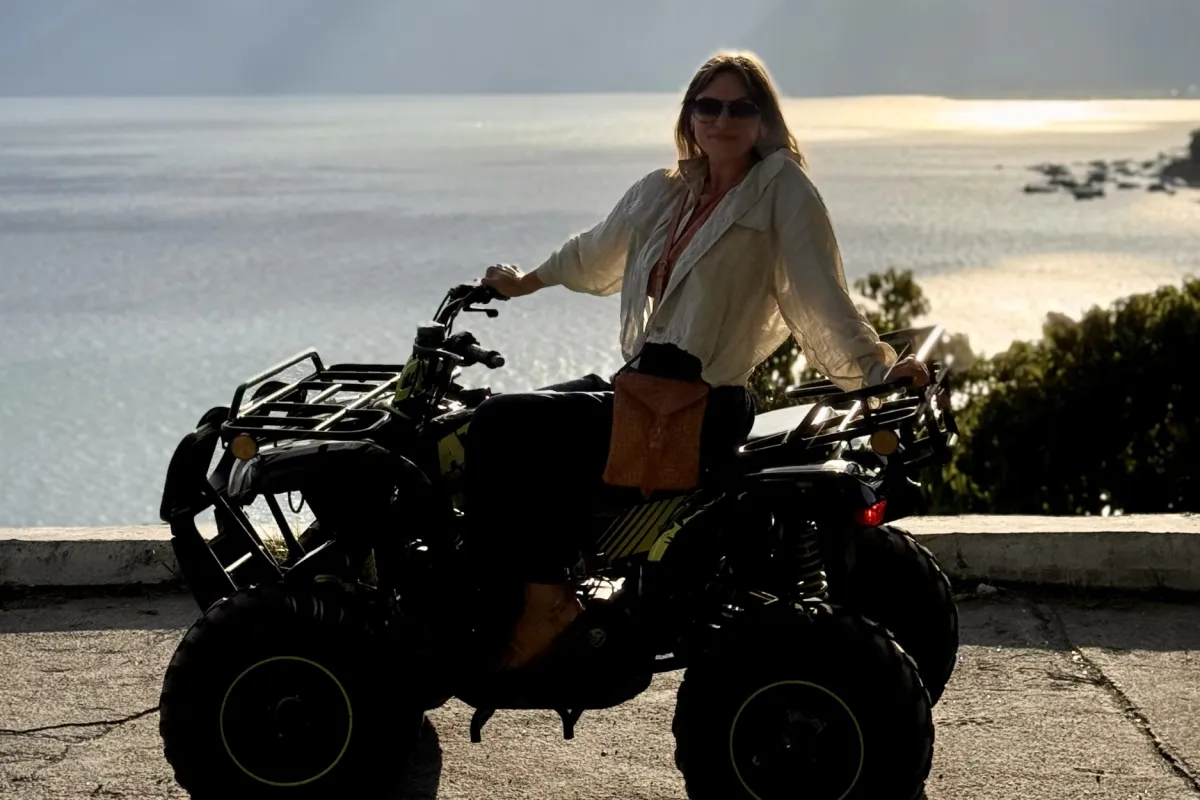
For me, one of the most unexpected places I rebuilt that trust was solo travel. There's nothing like being alone in a new country to show you exactly how capable you are. You navigate the language you don't speak, the turn you didn't plan for, the version of yourself that only shows up when there's no one else to defer to. Every small thing you figure out on your own becomes a deposit back into a trust account you'd let run dry. And slowly, the internal foundation gets solid enough that you can start speaking your needs externally, because you finally believe they're real.
We talked about this on a recent episode of The Wealth We Hold with Jennifer Corbeau, a retreat leader who's spent over a decade making big, often solo, often irreversible decisions in unfamiliar places. She said something that stayed with me:
"It's not only trusting myself that I will make a good decision, but just knowing it doesn't matter if I make the wrong decision. I will navigate through that. I'm gonna make a lot of wrong decisions, and I've made a lot of wrong decisions, but it doesn't mean anything about me. It just means I am learning."
That's what rebuilt self-trust actually sounds like. It's not the certainty that you'll get everything right. It's the deeper knowing that you'll navigate whatever comes, which means you no longer have to make yourself small to feel safe. When you trust yourself to handle the outcome, asking for what you want stops feeling so dangerous.
The Practice of Asking for Exactly What You Want
Here's what I'm practicing, and I'll be honest that it still feels uncomfortable most days: asking for exactly what I want, out loud, without apologizing for it.
Not a shrunken version I've pre-negotiated down to something more palatable. The actual ask. The full amount. The real need. It feels like too much every single time, and that feeling of "too much" is the exact thing I'm learning to sit through instead of shrinking around. Because the discomfort isn't a sign I'm asking for more than I should. It's a sign I'm asking for what I actually need after years of training myself not to.
If any of this is landing a little too close to home, I want you to know the pattern is reversible. I've spent years rebuilding my internal foundation, and only in the last handful of months have I started to see the harvest of work that went unseen for a long time. It's slow. It's mostly invisible while you're in it. And it's absolutely worth it, because the alternative is a whole life lived at the smallest possible size.
You are allowed to want what you want, in the full size that you want it, and to trust yourself enough to ask for it out loud. Those aren't separate skills. The self-trust is what makes the asking possible, and every honest ask, in turn, rebuilds a little more of the trust.
If You're Rebuilding Too
If you're in your own rebuild right now, brick by brick, mostly unseen, I want you to have a room full of women who understand exactly what that feels like. This is the whole reason we hold our free monthly Finding Common Ground women's circle. This month our theme is The Quiet Cost of Asking for Less, and we're sitting together in reflection on the ways we've made ourselves small and where along the way we lost self-trust. No pitch, no agenda, no recording. Just an hour where nobody is asking you for less.
And if you're ready to stop shrinking in your business specifically, the place where asking for less quietly costs you the most, we'd love to help you rebuild that foundation with a clearer set of eyes. Book a 90-Minute Strategy Call with us.
🎧 Go listen to the full conversation with Jennifer Corbeau, founder of Spiral Path Journeys, on The Wealth We Hold. There's a lot more in there, including what solo travel taught her about trusting herself through the wrong turns without losing herself in them.


